
What Does “Refute Meaning” Mean in Chat or Text?
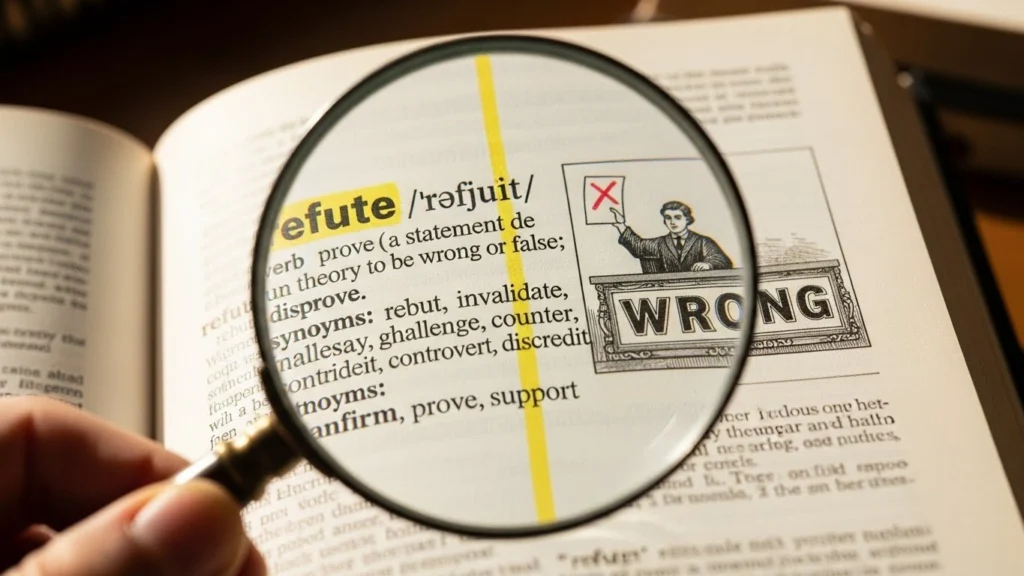
At its core, refute is a verb that means to prove that a statement, claim, or argument is wrong or false. Unlike simply disagreeing, refuting is backed by reasoning, evidence, or facts.
Key points:
Formal meaning: To disprove or argue against something with evidence.
Casual meaning in chat: Sometimes used loosely to call out a claim someone made online.
Origins and history:
The word refute comes from Latin refutare, meaning “to drive back or repel.” While traditionally used in debates, essays, and academic writing, it has made its way into digital conversation, especially on platforms where arguments, opinions, and “receipts” are shared.
How People Use “Refute Meaning” in Real Conversations
People use refute in both serious and casual contexts. Here’s where you’re most likely to see it:
Platforms:
Texting: When clarifying misunderstandings or responding to claims.
Instagram/Twitter threads: Users often comment to refute statements made in posts or replies.
Discord/Reddit: Refuting arguments is common in debates or discussion channels.
Forums & comment sections: “Refute” shows you’re engaging critically with someone’s point.
Academic/Work chats: Often literal use, like refuting a report or proposal.
When it’s appropriate vs. awkward:
Appropriate: “I can refute that claim with data from last year.”
Awkward: Using “refute” in casual memes or jokes where simple disagreement works better.
Insider tip: In modern Gen Z & millennial texting culture, saying “I can refute that” can sometimes sound overly formal or dramatic unless you’re actually providing evidence.
Real-Life Examples of “Refute Meaning” in Text Messages
Here are chat-style examples to make it crystal clear:
Debate with a friend:
Friend: “Pineapple on pizza is the worst topping ever.”
You: “I can refute that—I tried it last week, and it’s actually really good.”Online argument:
User1: “Cats are better than dogs.”
User2: “I have to refute that with my own experience—dogs can be just as affectionate.”Fact-checking in school work chat:
Classmate: “The moon landing was fake.”
You: “I can refute that using NASA’s official archives.”
Each example shows refute in action: it’s not just disagreement; it’s evidence-based pushback.
Common Mistakes & Misunderstandings
Even experienced texters can slip up with refute. Watch out for these:
Confusing refute with “deny” – Denying is just saying something isn’t true. Refuting is proving it with logic or evidence.
Using it in casual memes or jokes – “Refute that!” can sound overly formal or out of place.
Tone misinterpretation – Without proper context, saying “I can refute that” might sound confrontational.
Pro tip: If your goal is casual chat, phrases like “nah, that’s not true” or “I disagree” may fit better. Use refute when you want to sound authoritative or evidence-based.
Related Slangs & Abbreviations
If you’re learning chat language, these terms are related to refute:
TL;DR: Used to summarize a point you might refute.
Receipts: Evidence or proof that can help you refute claims online.
Cap/No Cap: “Cap” means lying; you might refute someone saying “cap.”
IKR (I know, right?): Often used after agreeing with a refuting argument.
These terms can be linked internally to pages explaining modern slang and abbreviations for better SEO.