

What Does “Micro Cheating” Meaning in Chat or Text?
Micro cheating meaning refers to small, seemingly minor actions in a relationship that may indicate emotional or flirtatious interest in someone outside your primary partnership. Unlike full-blown cheating, these behaviors aren’t overtly sexual or physical—but they can still create trust issues.
Key Points:
Emotional micro cheating: Flirting, sending secretive messages, or seeking attention from someone other than your partner.
Digital micro cheating: Liking someone’s provocative post, exchanging private DMs, or having hidden chats.
Behavioral signs: Making excuses to see someone, maintaining intimate online connections, or hiding communication.
Origins & History
The term “micro cheating” emerged in online forums and relationship blogs in the early 2010s. It gained traction with the rise of smartphones and social media, where even tiny interactions—like a lingering DM—could signal a breach of trust. Today, it’s commonly discussed in texting, dating apps, and relationship advice platforms, reflecting how digital communication changes modern relationships.
How People Use “Micro Cheating Meaning” in Real Conversations
Understanding micro cheating in context is key. Here’s where and how people usually talk about it:
Platforms:
Texting: People share suspicions about subtle flirty messages.
Instagram & Snapchat: Liking posts or sending streaks can be flagged as micro cheating.
Discord & Forums: Gaming communities discuss emotional micro cheating, like private DMs to friends or fans.
Dating Apps: Swiping or chatting outside your primary relationship may fall under micro cheating.
Appropriate vs Awkward Use
Appropriate: “I think my partner is micro cheating—they’ve been messaging their ex late at night.”
Awkward: Overusing the term for harmless interactions, like liking a coworker’s post.
In casual chats, saying someone is “micro cheating” can be playful or serious, depending on tone. Context matters—a lot.
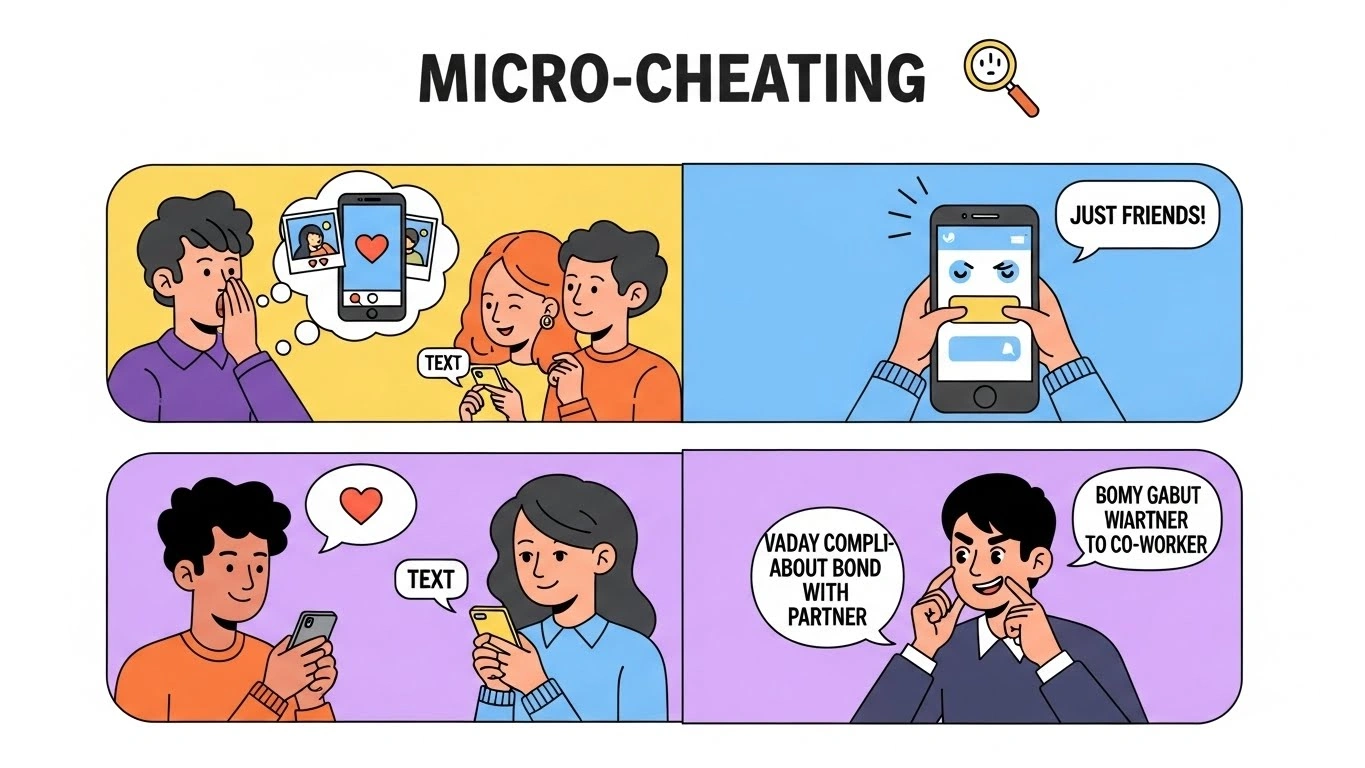
Real-Life Examples of “Micro Cheating Meaning” in Text Messages
Here are some realistic scenarios:
The Flirty DM
Text: “You’re so funny, we should hang out sometime ”
”
Explanation: Even if nothing happens, this is a classic micro cheating behavior—seeking emotional attention outside a relationship.Private Social Media Interactions
Text: “Why do you always like their posts but not mine?”
Explanation: Liking or commenting excessively on someone else’s content without your partner knowing can be micro cheating.Secret Conversations
Text: “I only talk to them because they get me.”
Explanation: Hiding chats, even if innocent, may count as micro cheating because it creates emotional distance from your partner.Excessive Flirting in Games or Forums
Text: “You’re hilarious in voice chat. Can we talk outside the game?”
Explanation: Emotional micro cheating can occur online—even in non-romantic settings—if the intent is flirtatious or intimate.Planning Private Meetups
Text: “Want to grab coffee? Just us.”
Explanation: Secret one-on-one plans can qualify as micro cheating if your partner isn’t aware and there’s emotional intimacy.
Common Mistakes & Misunderstandings
Even with a clear definition, people often misinterpret micro cheating. Here’s what to watch out for:
Confusing micro cheating with casual friendship: Not every private chat is cheating. The intent matters.
Ignoring context: A harmless like or DM isn’t micro cheating if it’s friendly and transparent.
Overreacting to tone: Playful jokes or memes may look suspicious but aren’t always cheating.
ASL confusion: Some people mistakenly think micro cheating refers to literal gestures or codes—it doesn’t.
Being aware of these mistakes helps you avoid unnecessary drama in relationships and online chats.
Related Slangs & Abbreviations
Gaslighting: Manipulating someone to question their reality—can accompany micro cheating in toxic dynamics.
Breadcrumbing: Giving just enough attention to keep someone interested without commitment.
Benching: Keeping someone on the side while dating others.
Orbiting: Ghosting someone but still liking their content on social media.
These terms often pop up alongside discussions of micro cheating in forums, TikTok threads, and texting culture, making them useful to understand for internal linking or further reading.