

What Does Witchcraft Mean?
Witchcraft meaning refers to the practice of magical skills, rituals, or supernatural abilities.
Simple definition
The art or practice of using spells, charms, or rituals to influence events or people.
Historically, it could involve communication with spirits or natural forces.
Core idea
Witchcraft can be spiritual, religious, or practical, depending on culture and beliefs.
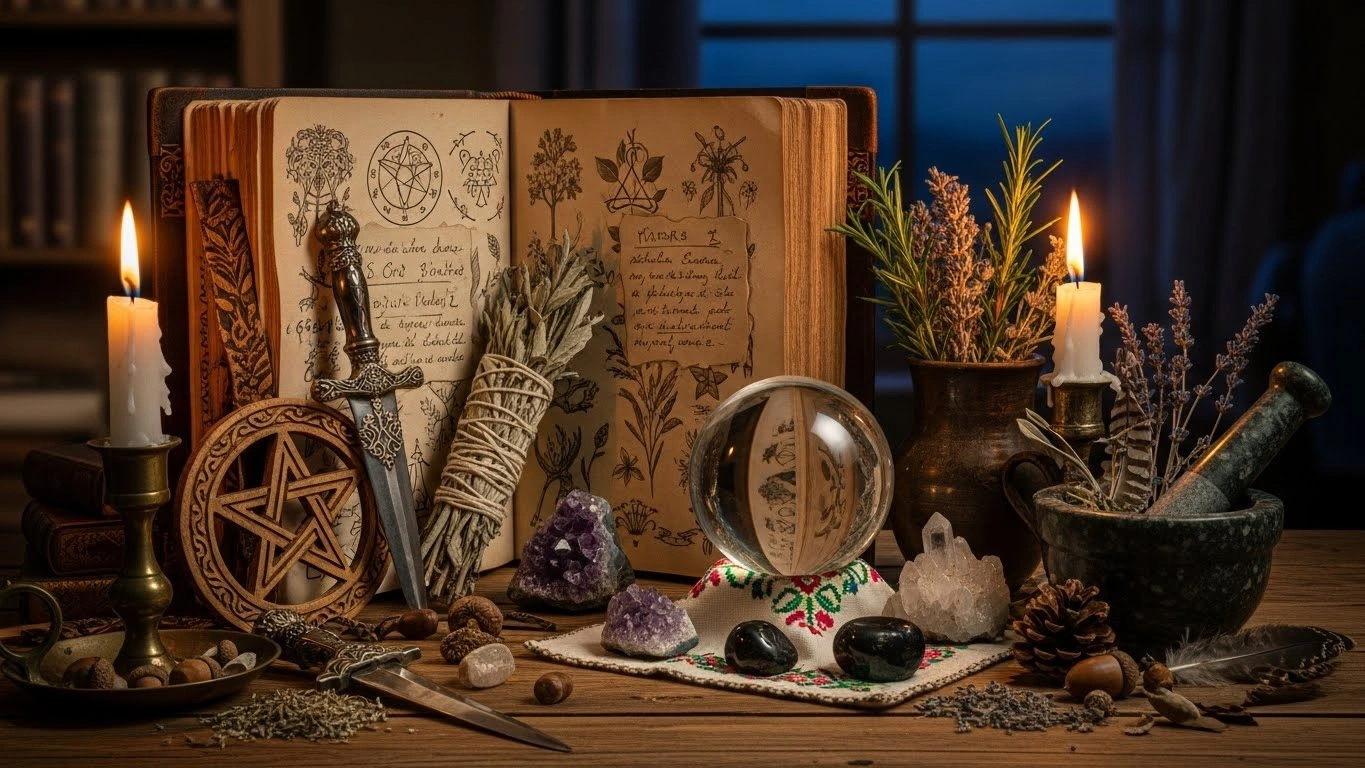
It often involves rituals, symbols, herbs, and other magical practices.
History and Origin of Witchcraft
Witchcraft has existed across cultures for thousands of years.
Ancient times
In many ancient societies, people called “witches” or shamans were healers, spiritual guides, or ritual leaders.
Magic and ritual were often part of daily life for health, protection, and guidance.
Middle Ages
In Europe, witchcraft was often feared, leading to witch hunts and trials.
Many accused were innocent, and fear of witchcraft influenced laws and social norms.
Modern times
Today, witchcraft is often a religious or spiritual practice, like Wicca, or part of modern paganism.
It’s also a symbol in pop culture, from movies to books to online communities.
Witchcraft Meaning in Modern Life
Modern witchcraft is diverse and can include:
Wicca and Neo-Paganism: Spiritual practice involving rituals, nature, and ethics.
Spellwork and magic: Using rituals or charms for intentions like protection or manifestation.
Divination: Tarot, astrology, or scrying to gain insight.
Herbalism and energy work: Using plants and energy for wellness or ritual.
It’s important to note that most modern practitioners focus on healing, empowerment, and personal growth, not harm.
How People Use Witchcraft Meaning in Conversations
The term witchcraft appears in everyday language, online discussions, and pop culture.
Examples:
“She practices witchcraft and loves tarot reading.”
“That trick was pure witchcraft!” (figurative, meaning impressive or mysterious)
“Modern witchcraft focuses on mindfulness and rituals.”
In casual use, it can mean both literal magical practice or metaphorical “amazing skill.”
Real-Life Examples of Witchcraft Meaning
Example 1:
“She studies witchcraft and performs rituals to connect with nature.”
Explanation: Spiritual practice involving rituals and magic.
Example 2:
“The old village believed witchcraft could protect crops from harm.”
Explanation: Historical use of magic for practical purposes.
Example 3:
“His coding skills are witchcraft; I can’t believe he fixed it so fast.”
Explanation: Figurative use, meaning impressive or seemingly magical skill.
Example 4:
“Witchcraft today often includes meditation, herbal remedies, and energy work.”
Explanation: Modern, peaceful, and spiritual interpretation.
Common Mistakes & Misunderstandings
Mistake 1: Thinking witchcraft is always evil
Most modern witchcraft is ethical, spiritual, and positive.
Mistake 2: Assuming witchcraft is illegal
In most countries, practicing witchcraft is legal and protected as a spiritual practice.
Mistake 3: Confusing witchcraft with superstition
Witchcraft can be organized spiritual practice, not random superstition.
Mistake 4: Believing only women practice witchcraft
People of any gender practice witchcraft today.
Related Terms
Understanding similar terms helps clarify the witchcraft meaning:
Wicca: A modern Pagan religion that often involves witchcraft.
Magic: Broader term for supernatural influence.
Occult: Practices or knowledge hidden from mainstream understanding.
Spellwork: The act of performing rituals for a specific purpose.