

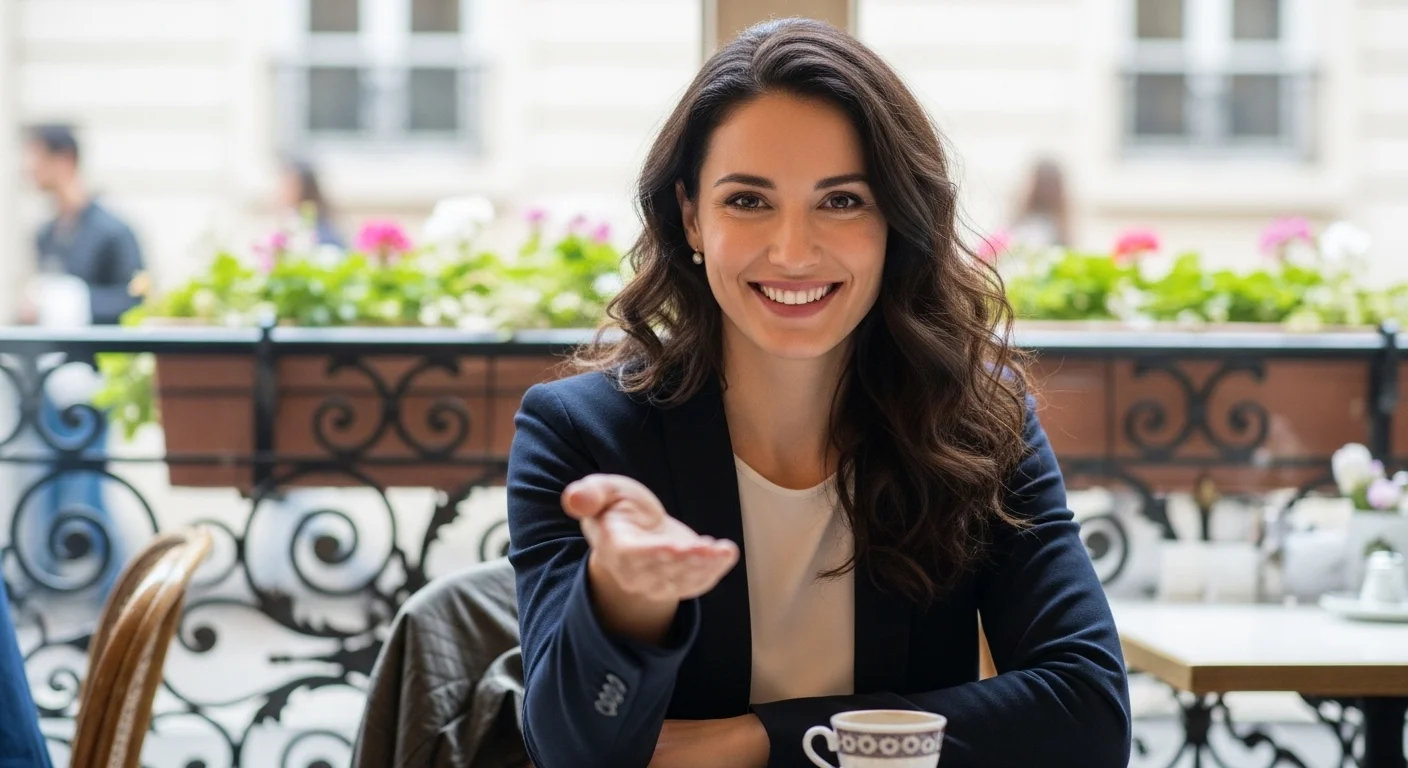
Enchanté Meaning in French
In French, “Enchanté” is a polite expression that literally means “delighted” or “enchanted”. It is commonly used when meeting someone for the first time to say:
“Nice to meet you” or “Pleased to meet you”
Example:
“Bonjour, je suis Marie.”
“Enchanté !”
(Hello, I’m Marie. Nice to meet you!)
Enchanté French Pronunciation
Pronunciation:
IPA: /ɑ̃.ʃɑ̃.te/
Sounds like: “ahn-shahn-tay”
Tip:
The “en” sounds nasal, like “ahn”
The accent é is pronounced like “ay”
Enchante Meaning Nice to Meet You
When translated in context, “Enchanté” means:
Nice to meet you
Pleased to meet you
Example:
“Bonjour, je m’appelle Jacques.”
“Enchanté de vous rencontrer.”
(Hello, my name is Jacques. Nice to meet you.)
Enchante Meaning Spanish
In Spanish, there is no exact word-for-word translation, but “Encantado” (male) / Encantada (female)” is equivalent to Enchanté in French.
Example:
“Hola, soy Carlos.”
“¡Encantado!” (Nice to meet you!)
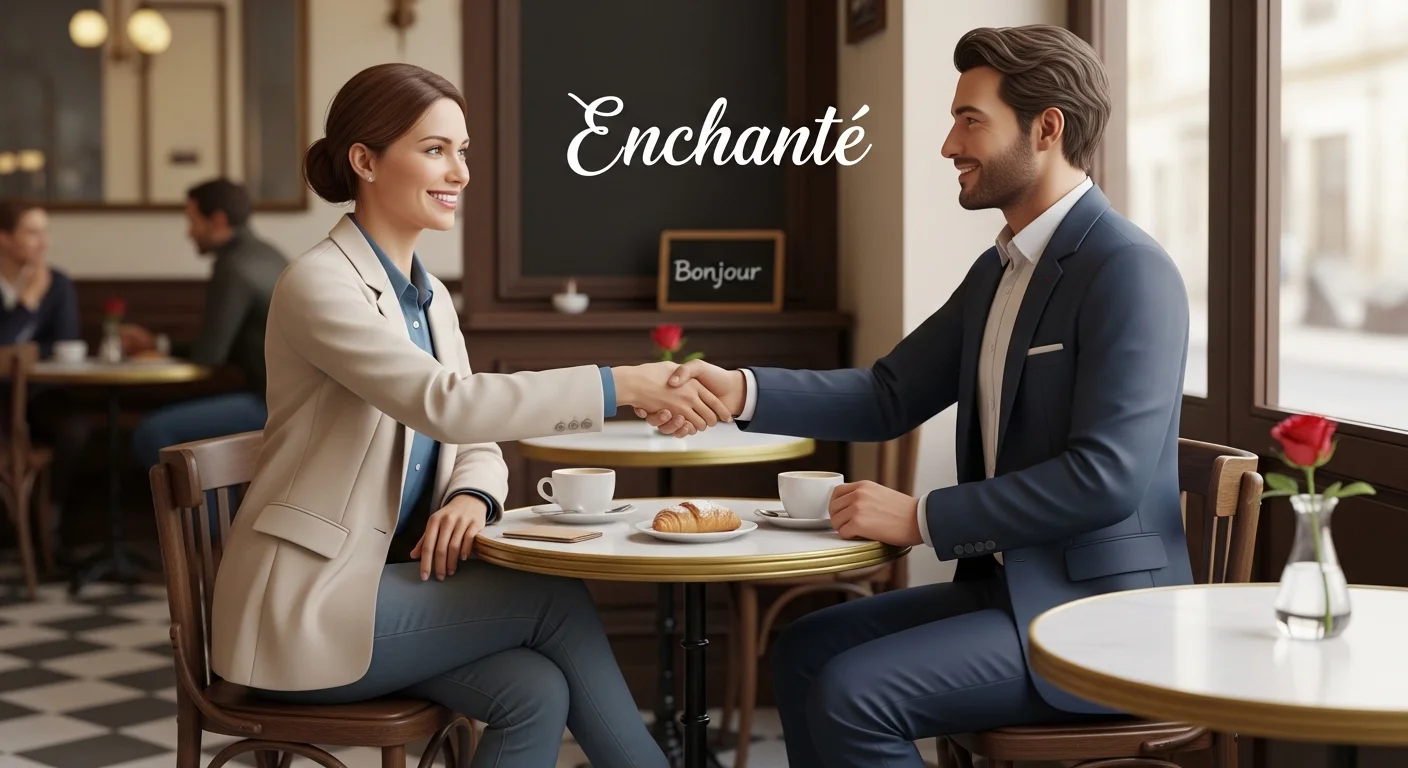
Bonjour Enchanté Meaning
The phrase “Bonjour, enchanté” combines:
Bonjour = Hello / Good day
Enchanté = Nice to meet you
Example:
“Bonjour, enchanté !”
(Hello, nice to meet you!)
Enchante Meaning Italian
In Italian, the equivalent of Enchanté is:
Piacere – meaning pleasure (to meet you)
Used when greeting someone politely
Example:
“Ciao, mi chiamo Lucia.”
“Piacere!”
(Hi, I’m Lucia. Nice to meet you!)
Enchanté Greeting
As a greeting, Enchanté is:
A polite, formal, or friendly way to acknowledge meeting someone for the first time
Usually accompanied by a handshake or smile
Example:
“Enchanté, je suis ravi de faire votre connaissance.”
(Nice to meet you, I’m pleased to make your acquaintance.)
Enchanté Response
When someone says “Enchanté”, a proper response is often:
“Enchanté également” – Nice to meet you too
Or simply repeat “Enchanté” with a smile
Example:
Person A: “Enchanté !”
Person B: “Enchanté également !”
What Does Enchante Meaning Mean
Enchante is a French word that means “Nice to meet you” or literally “Enchanted”.
In simple terms:
Enchante = I’m pleased to meet you
It’s a polite and friendly greeting used during introductions
Gender and Pronunciation
Enchante – masculine form (used by men)
Enchantee – feminine form (used by women)
Pronunciation: ahn-shahn-tay
Example:
A man meets someone new and says: “Enchante.”
A woman meets someone new and says: “Enchantee.”
How People Use Enchante Meaning in Real Conversations
Common Contexts
Meeting someone for the first time
Formal introductions
Business or social events
Letters or emails in French culture
Example Sentences
“Bonjour, je m’appelle Pierre. Enchante.”
Translation: “Hello, my name is Pierre. Nice to meet you.”“Je suis Julie. Enchantee de vous rencontrer.”
Translation: “I’m Julie. Pleased to meet you.”
Enchante Meaning in French Culture
In France and other French-speaking countries, politeness and formal greetings are important. Enchante shows:
Respect for the person you meet
A friendly and approachable tone
Proper etiquette during introductions
It is often used alongside handshakes or smiles. In informal settings, people might just say Salut instead of enchante.

Real-Life Examples of Enchante
Example 1: Meeting Someone New
Conversation:
Person A: “Bonjour, je m’appelle Marc.”
Person B: “Enchante, Marc. Je suis Sophie.”
Explanation:
Person B is politely saying “Nice to meet you.”
Example 2: Business Introduction
Email or text:
“Enchante de faire votre connaissance. Je travaille chez XYZ.”
Explanation:
Used formally to express pleasure at meeting a professional contact.
Example 3: Travel and Tourism
Scenario:
Guide: “Je suis votre guide, enchante !”
Explanation:
Polite greeting to tourists.
Example 4: Literature or Writing
Sentence:
“Elle répondit, ‘Enchantee,’ avec un sourire timide.”
Explanation:
Shows politeness and friendliness in a story.
Example 5: Casual Social Event
Text:
“Enchantee de te rencontrer enfin en personne !”
Explanation:
Used politely when meeting someone for the first time in an informal context.
Common Mistakes and Misunderstandings
Forgetting Gender Agreement
Mistake:
Women saying enchante instead of enchantee
Correction:
Men: Enchante
Women: Enchantee
Using It Too Informally
Mistake:
Saying enchante in casual greetings like “Salut”
Tip:
Best for first-time meetings or polite introductions
Confusing It With Hello
Mistake:
Thinking enchante is a simple hello
Reality:
It specifically means pleased to meet you, not a general greeting
Overusing Enchante in Repeated Meetings
Mistake:
Saying enchante multiple times in the same day to the same person
Tip:
Use only for first-time introductions
Related Words and Phrases
Ravie de vous rencontrer – Pleased to meet you
Bonjour – Hello / Good day
Salut – Hi / informal hello
Enchante de faire votre connaissance – Pleased to make your acquaintance
Heureux/Heureuse – Happy, delighted (formal)
These phrases are often used alongside or instead of enchante depending on formality.