

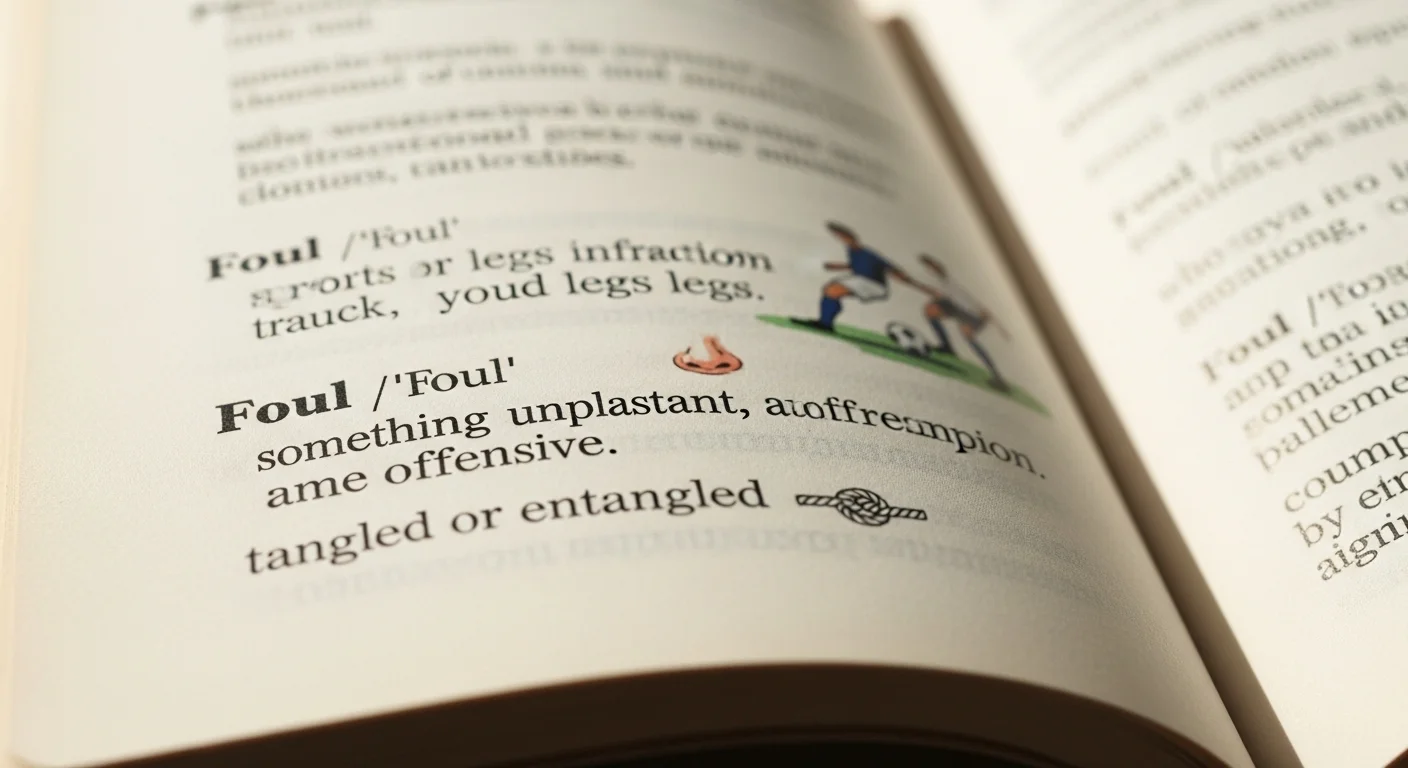
Foul Meaning in English
In English, foul generally means offensive, unpleasant, or morally wrong. It can describe smells, behavior, or situations that are considered bad or harmful.
Example:
The trash had a foul smell that filled the room.
His behavior was truly foul and unacceptable.
Foul Meaning in Farsi
In Farsi (Persian), foul can be translated as:
بدبو (badbū) – for a bad smell
زشت یا ناپسند (zesht yā nāpasand) – for something offensive or unpleasant
Example:
این غذا بدبو است.
(This food is foul.)
Foul Meaning in Football
In football (soccer or American football), a foul refers to breaking the rules of the game, often involving unfair physical contact or unsportsmanlike behavior.
Example:
The referee called a foul for tripping the striker.
Committing a foul can result in a free kick or penalty.
Foul Meaning in Food
When applied to food, foul means:
Spoiled, rotten, or inedible
Often used to describe a bad taste or smell
Example:
The milk went foul after a week in the fridge.
Foul Meaning in Sports
In general sports, a foul is:
A violation of the rules
Can result in penalties, free throws, or loss of possession depending on the sport
Example:
He was penalized for a foul in basketball for illegal contact.
Foul Language Meaning
Foul language refers to:
Profanity, swearing, or offensive words
Often called bad language or cuss words
Example:
Using foul language in school is strictly prohibited.
Foul Meaning in Engineering
In engineering, foul can describe:
Blockages, contamination, or corrosion in systems
Examples include fouled pipes, engines, or marine equipment
Example:
The ship’s propeller became fouled with seaweed.
Foul Meaning Slang
In slang, foul can mean:
Something unfair, unpleasant, or disgusting
Can also describe a person behaving badly
Example:
“That was a foul move, cheating like that!”
What Does “Foul Meaning” Mean in Chat or Text?
In modern slang, “foul” means something that is wrong, unfair, messed up, disrespectful, or morally questionable — not necessarily illegal, but definitely not okay.
Simple slang definition
Foul (slang): Something that feels shady, cruel, inappropriate, or out of line.
It’s often used as a reaction, not a detailed explanation.

Different meanings based on context
The meaning of foul in chat depends heavily on how it’s used:
Unfair behavior:
“They fired him without warning. That’s foul.”Disrespectful actions:
“Posting that screenshot was foul.”Morally wrong or shady:
“Cheating on her like that is foul.”Gross or disturbing (lighter tone):
“Cold pizza with ketchup? That’s foul.”
In slang, foul doesn’t always mean illegal — it means socially unacceptable or crossing a line.
Brief origin of “foul meaning” as slang
Originally, foul comes from Old English meaning dirty or impure. Over time, it became common in:
Sports (rule violations)
Everyday speech (bad smells, bad behavior)
Urban and internet slang (morally wrong or messed up actions)
Online culture simplified it into a quick judgment word — short, expressive, and emotionally loaded.
How People Use “Foul Meaning” in Real Conversations
People use foul in text as a reaction, not a formal statement. It’s emotional, casual, and often immediate.
Where you’ll see it used
Instagram comments
Snapchat replies
TikTok captions
Discord chats
Gaming voice/text chats
Dating app conversations
Online forums
Common ways people use “foul”
As a standalone reaction
“Nah, that’s foul.”As a judgment
“What he did was foul.”As emphasis
“That’s actually foul behavior.”
When it’s appropriate
Use “foul” when:
Someone crosses a social or moral line
A situation feels unfair or shady
You want to express disapproval without explaining everything
When it’s awkward or wrong
Avoid using “foul” when:
Talking formally (emails, work chats)
Speaking to someone unfamiliar with slang
You need clarity instead of emotion
It’s informal, not professional.
Real-Life Examples of “Foul” in Text Messages
Here’s how foul meaning slang shows up in real chats — plus what each example means.
Example 1
Text:
“Bro ate my food and didn’t even ask. That’s foul.”
Meaning:
The speaker feels disrespected and annoyed. The action crossed a personal boundary.
Example 2
Text:
“They ghosted after three months?? That’s foul.”
Meaning:
Ghosting is seen as emotionally unfair or rude.
Example 3
Text:
“Posting that private convo is foul behavior.”
Meaning:
Sharing private messages publicly is considered unethical.
Example 4
Text:
“Cold fries dipped in soda is foul.”
Meaning:
Here, “foul” is playful — meaning gross or disturbing, not morally wrong.
Example 5
Text:
“They blamed you for their mistake? Foul.”
Meaning:
The speaker disapproves of unfair blame.
Common Mistakes & Misunderstandings
Despite its popularity, foul in chat is often misunderstood.
Mistake 1: Taking it literally
Some people think “foul” always means:
Bad smell
Sports penalty
Criminal behavior
In slang, it’s mostly emotional judgment, not literal.
Mistake 2: Confusing tone
“Foul” can be:
Serious
Playful
Dramatic
Half-joking
Tone depends on:
Context
Relationship
Emojis or punctuation (even if not used here)
Mistake 3: Using it too formally
Saying “that was foul” in a professional meeting may confuse people or sound inappropriate.
Mistake 4: Assuming it always means illegal
Most of the time, foul means socially wrong, not legally wrong.
Related Slangs & Abbreviations
If you understand foul, these similar slang terms will make sense too:
Outta pocket – Acting wild or inappropriate
Shady – Suspicious or untrustworthy
Messed up – Morally or emotionally wrong
Low – Disrespectful behavior
Snake behavior – Betrayal or disloyalty
Dirty – Unfair or sneaky actions
Wild – Shocking or extreme behavior
These terms often overlap and are used in similar contexts.
SEO Breakdown: How “Foul Meaning” Is Searched Online
People commonly search:
What does foul mean in text
Foul meaning slang
Foul in chat
What does that’s foul mean
Foul slang definition
In almost all cases, searchers want social context, not dictionary definitions — which is why slang explanations matter.