

Convert Meaning in English
The word convert in English means to change something from one form, purpose, system, or belief to another. It is commonly used as both a verb and a noun. As a verb, “convert” refers to transforming or altering something. As a noun, it can refer to a person who has changed their beliefs, especially religious beliefs.
For example:
She decided to convert her garage into a home office.
He converted to a different religion.
The word originates from the Latin convertere, meaning “to turn around” or “to transform.” In everyday English usage, convert is associated with change, transformation, and adaptation across various fields like religion, technology, business, and mathematics.
Convert Money
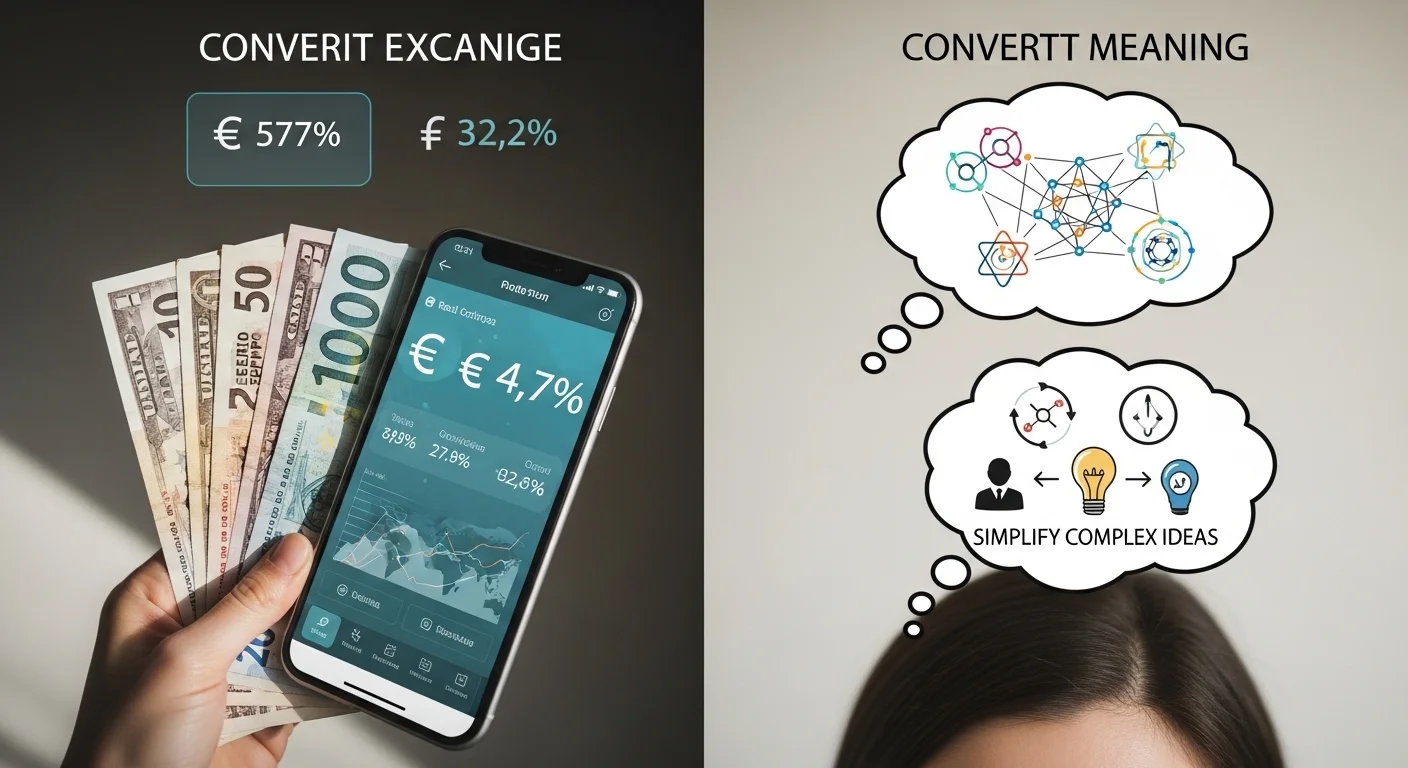
To convert money means to exchange one currency for another based on the current exchange rate. This process is commonly done when traveling internationally, trading globally, or making international online purchases.
For example:
Converting US dollars to euros
Changing British pounds into Japanese yen
Money conversion is influenced by foreign exchange rates, which fluctuate based on global economic conditions. Financial institutions, banks, and currency exchange services handle money conversion for individuals and businesses.
In simple terms, converting money means changing the value of one currency into the equivalent value of another currency.
Convert Meaning in Math
In mathematics, convert means to change a number, measurement, or mathematical expression from one form to another without changing its value.
Common examples include:
Converting fractions to decimals (e.g., 1/2 to 0.5)
Converting centimeters to meters
Converting binary numbers to decimal numbers
In math, conversion helps simplify calculations, compare values, and solve problems more efficiently. The key idea is that the quantity remains the same, but its representation changes.
Convert Meaning in Arabic
The word convert in Arabic can have several meanings depending on context. The most common translations are:
يحوّل (Yuhawwil) – meaning “to transform” or “to change”
يعتنق (Ya’taniq) – meaning “to adopt a religion”
For example:
Convert money = يحوّل المال
Convert to Islam = يعتنق الإسلام
In Arabic, the meaning of convert depends on whether it refers to physical change, currency exchange, or religious transformation.
Convert Meaning in Urdu to English
In Urdu, the word for convert is commonly:
تبدیل کرنا (Tabdeel karna) – meaning “to change”
مذہب تبدیل کرنا – meaning “to change religion”
When translating from Urdu to English, “convert” typically means to transform, change, or exchange something into a different form.
For example:
اس نے ڈالر کو روپے میں تبدیل کیا۔
→ He converted dollars into rupees.
So, convert in Urdu to English generally means “to change” or “to transform.”
Convert Meaning in Business
In business, convert refers to changing potential customers or prospects into actual paying customers. This is commonly used in marketing and sales.
For example:
Converting website visitors into buyers
Converting leads into clients
In digital marketing, conversion rate is a key performance indicator (KPI) that measures how many visitors complete a desired action, such as making a purchase, signing up for a newsletter, or filling out a form.
In business terms, convert means turning opportunities into results or revenue.
Convert Meaning in Chinese
In Chinese, the word convert can be translated differently depending on context:
转换 (Zhuǎnhuàn) – to transform or switch
兑换 (Duìhuàn) – to exchange (especially money)
皈依 (Guīyī) – to convert to a religion
For example:
Convert currency = 兑换货币
Convert data format = 转换数据格式
In Chinese, the meaning of convert varies depending on whether it relates to money, technology, religion, or general transformation.
Convert Meaning for Kids
For kids, convert means to change something into something else.
Simple examples:
Changing water into ice
Turning a box into a toy house
Changing minutes into hours
You can explain it to children like this:
“Convert means to change something so it becomes a different type, but it is still the same thing in value or use.”
In easy words, convert means to change or turn something into something else.
What Does “Convert” Mean in Chat or Text?
At its core, convert means to change something from one form, belief, or state into another.
But in chat and online conversations, the meaning depends heavily on context.
Basic Definition
Convert = to transform, change, or switch
This can apply to:
Beliefs or opinions
File formats or technology
Habits or preferences
Teams, fandoms, or trends
Convert Meaning Slang vs Formal Use
In formal English, convert often sounds serious:
Religion
Measurement units
File formats
In casual chat, it’s lighter and sometimes playful:
Changing opinions
Switching sides
Becoming a fan of something new
Brief Origin & History
The word convert comes from the Latin convertere, meaning “to turn around or transform.”
It entered English centuries ago, long before texting existed. What’s changed is how casually people use it now in messages, memes, and online jokes.
So when someone says:
“I converted him”
They probably don’t mean anything intense — just that they changed someone’s mind.
How People Use “Convert” in Real Conversations
Understanding the convert meaning in chat requires knowing where it’s being used.
Common Platforms Where You’ll See It
Text messages & WhatsApp
Instagram & TikTok comments
Discord servers
Reddit & forums
Dating apps
Gaming chats
Casual Modern Uses
Here’s how people usually mean it in everyday texting:
Changing opinions
“I used to hate coffee, but you converted me.”
Switching preferences
“Android user converted to iPhone.”
Joining a trend
“Another one converted to K-pop.”
Gaming or fandom loyalty
“I converted him to Team Red.”
When It Feels Natural vs Awkward
Appropriate:
Joking with friends
Light debates
Talking about preferences
Tech or file discussions
Awkward or risky:
Serious religious discussions
Sensitive political topics
With people you don’t know well
A good rule:
If the topic is casual, the word “convert” is usually safe.
Real-Life Examples of “Convert” in Text Messages
Let’s look at how convert meaning slang appears in actual chat-style messages.
Example 1: Opinion Change
Text:
“Not gonna lie, you converted me. That show is actually good.”
Meaning:
The speaker changed their opinion after someone’s recommendation.
Example 2: Tech Usage
Text:
“I need to convert this PDF to Word before sending it.”
Meaning:
Change a file format — very literal and common.
Example 3: Playful Friendship Chat
Text:
“Another one converted to pineapple pizza.”
Meaning:
Someone started liking something they used to dislike.
Example 4: Gaming Context
Text:
“He was a noob, but we converted him to our clan.”
Meaning:
The person joined a new group or team.
Example 5: Social Media Comment
Text:
“TikTok really converted me to skincare routines.”
Meaning:
The app influenced a habit or lifestyle change.
Common Mistakes & Misunderstandings
Even though the word is common, people still get confused about the convert meaning in text.
1. Confusing It with American Sign Language (ASL)
Some users mistakenly think convert is related to ASL or hand signs.
It’s not.
That confusion usually happens because:
ASL is often discussed online
Both terms appear in educational contexts
But convert has nothing to do with sign language unless clearly stated.
2. Using It Too Seriously in Casual Chat
Saying:
“I converted her beliefs”
Can sound intense or uncomfortable in a friendly conversation.
A better casual version:
“I kind of changed her mind.”
3. Tone Misinterpretation
Text lacks tone, so “convert” can sound:
Pushy
Judgy
Arrogant
Especially with strangers.
Adding context helps:
“Jokingly converted him”
“Finally converted me after months”
4. Assuming It’s Always Religious
Yes, conversion can be religious — but online, it’s often not.
Most modern uses are about:
Preferences
Tech
Trends
Opinions
Related Slangs & Abbreviations
If you’re learning the convert meaning slang, these related terms often appear nearby in chat.
Similar or Related Terms
Switch – Change sides or preferences
Turned – Informal version of convert
Joined – Became part of something
Convinced – Changed someone’s opinion
Went over to – Casual phrase meaning the same
Internet & Chat Variations
“You got me”
“I’m sold”
“You won”
“I’m on board now”
These phrases often replace “convert” in casual texting.
Why “Convert” Is So Popular in Online Language
The reason the convert meaning in chat works so well is because it’s:
Short and flexible
Easy to understand
Slightly dramatic (in a fun way)
Works for jokes, tech, and trends
It lets people describe change without long explanations.
That’s why you’ll see it everywhere in 2026 — from memes to group chats.
SEO Breakdown: What Does “Convert” Mean in Text?
To summarize the search intent people usually have:
What does convert mean in text?
→ It means changing opinions, preferences, or formats depending on context.Convert meaning slang
→ A casual way to say someone switched sides, tastes, or beliefs.Convert in chat
→ Often playful, rarely serious unless stated clearly.