
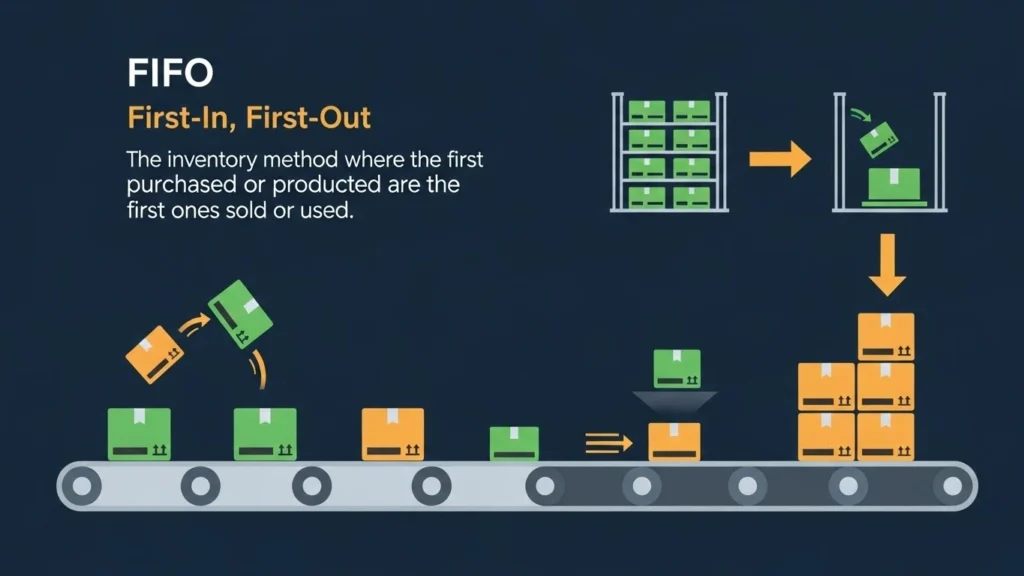

The term FIFO meaning is commonly used in business, accounting, and computer science — but what does it actually mean? FIFO stands for “First In, First Out.” It’s a method that describes how items, data, or assets are processed in the order they were received.
In accounting and inventory management, FIFO means the oldest stock is sold or used first. In computing, it refers to data structures and processes that handle tasks in the order they arrive.
In this guide, we’ll explain the full meaning of FIFO, explore how it works in different fields, and provide simple examples to make the concept easy to understand.

FIFO Meaning Job
FIFO in jobs most commonly stands for “Fly-In, Fly-Out.” It refers to a work arrangement where employees are flown to a remote job site for a specific period and then flown back home after their shift rotation ends.
FIFO jobs are common in industries like:
Mining
Oil and gas
Offshore drilling
Large construction projects
For example, a worker might do 2 weeks on-site and 1 week off, with the company covering travel and accommodation. FIFO jobs are often located in remote areas where permanent relocation is not practical.
LIFO Meaning
LIFO stands for “Last In, First Out.” It is a method used in inventory management and accounting. Under LIFO, the most recently added items are sold or used first.
For example, if a company buys goods at different prices, the newest stock is recorded as sold first under the LIFO method. This accounting approach can impact financial reporting and taxes, especially during periods of inflation.
LIFO is commonly compared with FIFO (First In, First Out), and businesses choose a method based on financial strategy and regulations.
FIFO Meaning in Trading
In trading and investing, FIFO (First In, First Out) is a method used to determine which shares or assets are sold first when multiple purchases were made at different times.
Under FIFO:
The oldest shares purchased are sold first.
This affects capital gains tax calculations.
For example, if you bought stocks at different prices over time and then sell some, the first shares you bought are considered the first sold under FIFO rules. Many tax authorities require FIFO as the default method for calculating gains.
FIFO Meaning Offshore
In offshore industries like oil rigs and marine operations, FIFO (Fly-In, Fly-Out) describes workers who travel to offshore platforms for scheduled rotations.
Workers typically:
Stay offshore for a set number of weeks.
Work long shifts (often 12 hours daily).
Return home after their rotation ends.
FIFO offshore jobs are demanding but usually offer higher pay due to the remote location and challenging working conditions.
FIFO Meaning Warehouse
In warehouse management, FIFO (First In, First Out) is an inventory control system where the oldest stock is sold or used first.
This method is important for:
Perishable goods
Food storage
Pharmaceuticals
Products with expiration dates
For example, items received first are placed at the front of shelves so they are picked first. FIFO helps reduce waste, spoilage, and financial loss.
FIFO Meaning Job Salary
In terms of salary, FIFO jobs (Fly-In, Fly-Out) often offer higher pay compared to regular local jobs. The increased salary compensates for:
Remote locations
Long working hours
Time away from family
Physically demanding conditions
Industries like mining and oil commonly provide additional benefits such as:
Free accommodation
Meals
Travel expenses
FIFO salaries vary by country, skill level, and industry but are generally considered financially rewarding.
FIFO Meaning in Medical
In medical and healthcare settings, FIFO (First In, First Out) is used in managing medical supplies and medications.
Hospitals and clinics use FIFO to:
Ensure older medicines are used before newer ones
Prevent expiration and waste
Maintain patient safety
For example, vaccines or medications with earlier expiration dates are used first under FIFO inventory systems.
FIFO Meaning in Cooking
In cooking and food management, FIFO (First In, First Out) is a food safety practice. It ensures that ingredients purchased or prepared first are used before newer stock.
Restaurants and commercial kitchens follow FIFO to:
Reduce food spoilage
Prevent foodborne illness
Maintain freshness
For example, milk bought on Monday should be used before milk bought on Wednesday. FIFO is a key principle in professional kitchen hygiene and inventory control.
What Does “FIFO” Mean in Chat or Text?
FIFO stands for First In, First Out.
In simple terms, it means:
The first thing that comes in is the first thing that goes out.
FIFO Meaning Slang vs Technical Meaning
The original FIFO meaning comes from business, computing, and logistics. But online, people use it in a more casual and flexible way.
In chat or text, FIFO usually means:
Things are handled in order
No skipping or favoritism
Whoever came first gets served first
For example:
Reply order in group chats
Turn-taking in games
Order of requests or messages
Brief Origin of FIFO in Online Use
FIFO didn’t start as slang. It comes from:
Computer science (data queues)
Accounting & inventory systems
Customer service workflows
As work culture moved online and people started chatting on Slack, Discord, and forums, FIFO naturally slipped into casual conversation. Over time, it became shorthand in chats — especially among gamers, tech users, and online communities.
So while FIFO isn’t “Gen Z slang” in the traditional sense, it’s very much part of modern internet language.
How People Use “FIFO” in Real Conversations
People don’t usually explain FIFO when they use it. They assume others understand it — which is why it can feel confusing at first.
Common Platforms Where FIFO Appears
You’ll most often see FIFO in chat on:
Discord servers
Gaming chats
Online forums
Workplace chats (Slack, Teams)
Comment sections and replies
What FIFO Implies in Conversation
When someone uses FIFO, they’re usually saying:
“We’re doing this fairly”
“No skipping ahead”
“Order matters”
It often shows up when:
Multiple people ask for help
People are waiting their turn
Messages are being answered in sequence
When FIFO Feels Natural vs Awkward
Appropriate use:
Group chats
Queue-based situations
Gaming or tech discussions
Awkward use:
Emotional conversations
Personal relationship texts
Casual small talk
Saying “FIFO” to a friend who’s venting can sound cold or robotic. Context matters.

Real-Life Examples of “FIFO” in Text Messages
Here are realistic, chat-style examples that show the FIFO meaning in action.
Example 1: Group Chat Help
Text:
“Hold on guys, I’m answering questions FIFO.”
Meaning:
The person will respond in the order messages were received.
Example 2: Gaming Lobby
Text:
“Team slots are FIFO, don’t cut.”
Meaning:
Players are accepted based on who joined first.
Example 3: Online Forum
Text:
“Requests handled FIFO, please be patient.”
Meaning:
No favoritism. Everyone waits their turn.
Example 4: Casual Chat Use
Text:
“I’ll watch the videos FIFO so I don’t miss anyone.”
Meaning:
They’ll watch links in the order sent.
Example 5: Slightly Awkward Use
Text:
“Your messages are FIFO, I’ll reply later.”
Meaning:
Technically correct, but emotionally dry. Sounds more professional than friendly.
Common Mistakes & Misunderstandings
Even though FIFO is simple, people still misuse or misunderstand it.
1. Thinking FIFO Is Internet Slang Only
FIFO is not internet-born slang. It’s a professional term that became casual over time. Treating it like “LOL” or “BRB” can confuse people.
2. Using FIFO in Emotional Conversations
FIFO works for systems, queues, and order — not feelings.
Wrong use:
Relationship arguments
Apologies
Sensitive topics
It can sound dismissive or robotic.
3. Confusing FIFO With Random Order
FIFO does not mean:
Random selection
Fair guessing
Equal priority
It strictly means order-based handling.
4. Assuming Everyone Understands It
Not everyone comes from a tech or gaming background. When in doubt, explain or use simpler wording.

Related Slangs & Abbreviations
If you’re learning FIFO meaning slang, these related terms might show up too.
LIFO
Last In, First Out
Opposite of FIFO
Often used jokingly or in tech contexts
Queue
A waiting line
Often implied when FIFO is mentioned
BRB
Be Right Back
Common in chats where FIFO order resumes later
AFK
Away From Keyboard
Used when FIFO pauses temporarily
TL;DR
Too Long; Didn’t Read
Sometimes used when FIFO replies are long
These terms often appear together in chats, forums, and gaming discussions.
FIFO Meaning Slang vs Professional Use
Let’s make this extra clear.
Professional FIFO:
Inventory systems
Accounting
Data processing
Customer service workflows
Chat FIFO:
Message order
Turn-taking
Fair response order
Casual shorthand
The meaning stays the same — only the tone changes.
Why FIFO Is Still Used in 2026
You might wonder why such an old term is still around.
Here’s why:
It’s short and efficient
It avoids long explanations
It sounds neutral and fair
It works across languages and cultures
In fast-moving chats, FIFO saves time.
FAQs
What does FIFO mean in text messages?
FIFO means “First In, First Out.” In texts, it usually means replies or actions will happen in the order messages were received.
Is FIFO slang or a technical term?
FIFO started as a technical term but is now commonly used in chats, gaming, and online conversations.
Is FIFO rude to use in chat?
It depends on context. It’s fine for group chats and queues but can sound cold in emotional conversations.
What does FIFO mean in gaming chats?
In gaming, FIFO usually means players or actions are handled based on join order.
Can FIFO mean something else in slang?
No. FIFO has a consistent meaning. If someone uses it differently, they’re likely misusing the term.
Conclusion
FIFO means “First In, First Out.” It’s a principle about maintaining order and fairness, ensuring that the first item (or person) to arrive is the first to be dealt with or responded to. This term is commonly used in chats, gaming, forums, and work messages. However, it’s not emotional slang — it’s more of a practical term used to organize or manage things efficiently. The key to using FIFO appropriately lies in context; in some situations, it can sound perfectly natural, while in others, it may come across as awkward or cold. What’s your favorite chat abbreviation that confused you at first? Drop it in the comments!
