

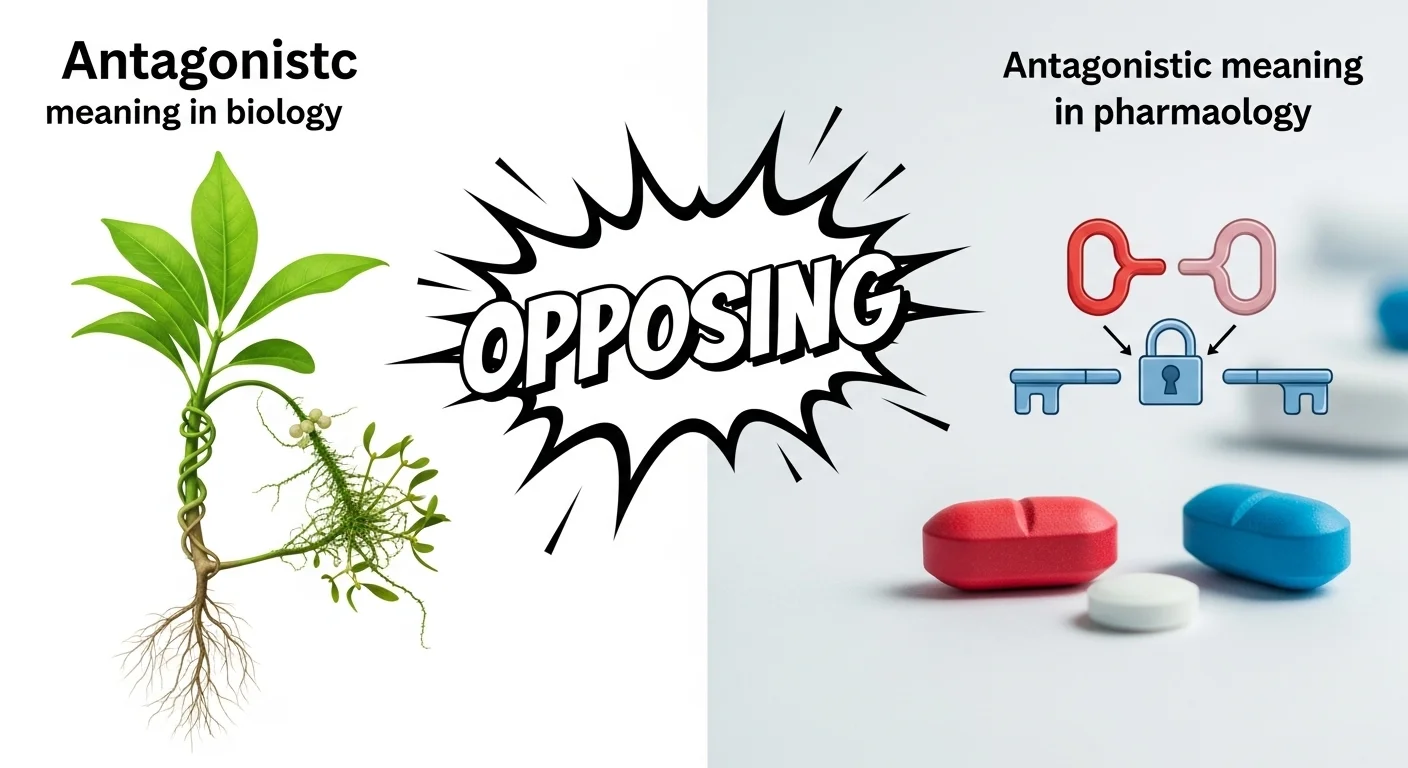
Antagonistic Meaning in Biology
In biology, antagonistic refers to two organisms, substances, or processes that oppose or counteract each other.
For example, certain bacteria may produce substances that inhibit the growth of other bacteria, showing an antagonistic relationship.
Example:
Some soil microbes have antagonistic effects on harmful plant pathogens.
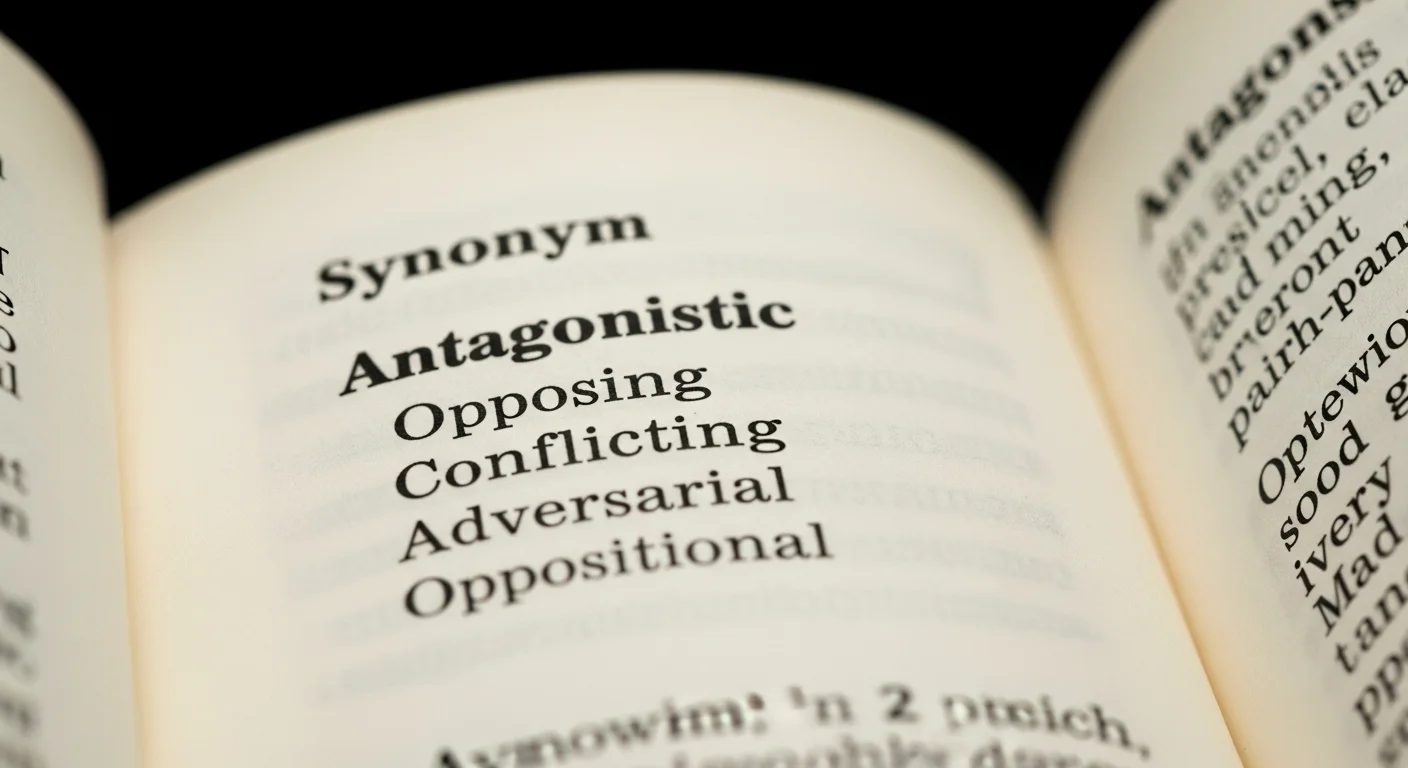
Antagonistic Synonym
Common synonyms for antagonistic include:
Hostile
Opposing
Conflicting
Adverse
Contrary
Resistant
Competitive
These words describe something that works against or opposes another thing.
Antagonistic Meaning in Pharmacology
In pharmacology, antagonistic refers to a drug or chemical that blocks or reduces the effects of another drug or biological substance.
This type of drug is called an antagonist, because it prevents a receptor from being activated.
Example:
A medication may act as a receptor antagonist, blocking the action of another chemical.
Antagonistic Meaning in Science
In general science, antagonistic describes forces, reactions, or elements that work in opposition to each other.
Scientists use the term to explain interactions where one factor reduces or cancels the effect of another.
Example:
Two chemicals may have antagonistic reactions when combined.
Antagonistic Meaning in Psychology
In psychology, antagonistic describes behavior or attitudes that are hostile, oppositional, or resistant toward others.
It may refer to personality traits where a person is argumentative, uncooperative, or confrontational.
Example:
His antagonistic behavior made teamwork difficult.
Antagonistic Meaning in Anatomy
In anatomy, antagonistic refers to muscles that perform opposite actions.
When one muscle contracts, the opposing muscle relaxes to allow movement.
Example:
The biceps and triceps are antagonistic muscles in the arm.
Antagonistic Meaning in Biology (Muscles)
In muscle biology, antagonistic muscles are pairs of muscles that work against each other to control movement.
For example:
Biceps bend the arm
Triceps straighten the arm
These opposite actions allow smooth and controlled movement.
Antagonistic Meaning in Arabic
The word antagonistic in Arabic can be translated as:
عدائي – meaning hostile or opposing
متضاد – meaning opposite or conflicting
These terms describe something that acts against or opposes another thing.
Example:
العلاقة بينهما كانت عدائية.
(Their relationship was antagonistic.)
What Does “Antagonistic Meaning” Mean?
The word antagonistic describes behavior, attitudes, or actions that oppose, resist, or create conflict with someone or something. It’s often used in psychology, literature, social interactions, and everyday conversation.
Simple definition
Antagonistic meaning:
Being hostile, unfriendly, oppositional, or acting in a way that creates tension, conflict, or resistance.
Common contexts
Personal relationships: Someone may act antagonistically toward a colleague or friend.
Literature or media: An antagonist is a character who opposes the protagonist.
Medical/psychological context: Certain drugs or conditions can be described as “antagonistic” to the body’s natural processes.
Origins of the Term
The word comes from the Greek “antagonistes”, meaning “opponent” or “rival,” which itself derives from anti- (against) + agon (contest or struggle). Historically, it referred to someone competing in games or contests, but the meaning has expanded to hostility, opposition, and conflict in modern English.
How Antagonistic Meaning Behavior Appears
Antagonistic behavior is often subtle, but it can also be overt.
Common signs
Criticism or sarcasm aimed to provoke
Passive-aggressive comments
Refusal to cooperate
Constant opposition to ideas or suggestions
Emotional manipulation to create tension
Everyday examples
Workplace: A colleague constantly challenges your ideas during meetings.
Friendships: Someone dismisses your achievements or makes snide remarks.
Online: Trolls in comment sections act antagonistically to spark arguments.
Psychological perspective
Antagonistic behavior is often linked to:
Stress or insecurity
Competitive nature
Personality traits like aggressiveness or narcissism
Desire for control or attention

Real-Life Examples of Antagonistic Meaning Behavior
Example 1: Workplace
Text/Scenario: “He disagrees with every proposal and refuses to collaborate.”
Meaning: Antagonistic behavior disrupting team progress.
Example 2: Family dynamics
Text/Scenario: “She always argues for the sake of arguing with her siblings.”
Meaning: Antagonistic attitude causing tension at home.
Example 3: Literature
Text/Scenario: “Voldemort is the main antagonist of the Harry Potter series.”
Meaning: A character opposing the protagonist, embodying antagonism.
Example 4: Online interactions
Text/Scenario: “The commenter’s antagonistic tone derailed the conversation.”
Meaning: Hostile or oppositional behavior in a digital setting.
Common Misunderstandings
1. Antagonistic vs aggressive
Antagonistic: Oppositional, resisting, or hostile behavior
Aggressive: Physically or verbally violent behavior
Not all antagonistic behavior is aggressive.
2. Antagonistic ≠ rude
Someone can be antagonistic without being overtly rude—they may challenge ideas rather than attack personally.
3. Antagonistic is not always intentional
Sometimes people are antagonistic unconsciously due to stress, insecurity, or misunderstanding.
Related Terms
Hostile: Openly unfriendly or harmful
Oppositional: Actively resisting or contradicting
Adversarial: Involving conflict or competition
Antagonist: A person or character opposing another
Passive-aggressive: Indirect antagonistic behavior